Seed packets
The seed packets that Willy Loman carries into his darkened backyard in the final hours of his life are the most poignant and desperate of his props. They are not merely gardening supplies; they are the physical embodiment of a man clinging to the last shred of a dream he can no longer realize. After being fired by Howard Wagner, humiliated at Frank's Chop House, and having his son Biff expose the family's web of lies, Willy retreats to the only arena where he once felt competent: the physical work of his hands. The seeds are his final, futile attempt to create something that will outlast him, to plant a future that his own life has failed to yield.
The Purchase and the Planting
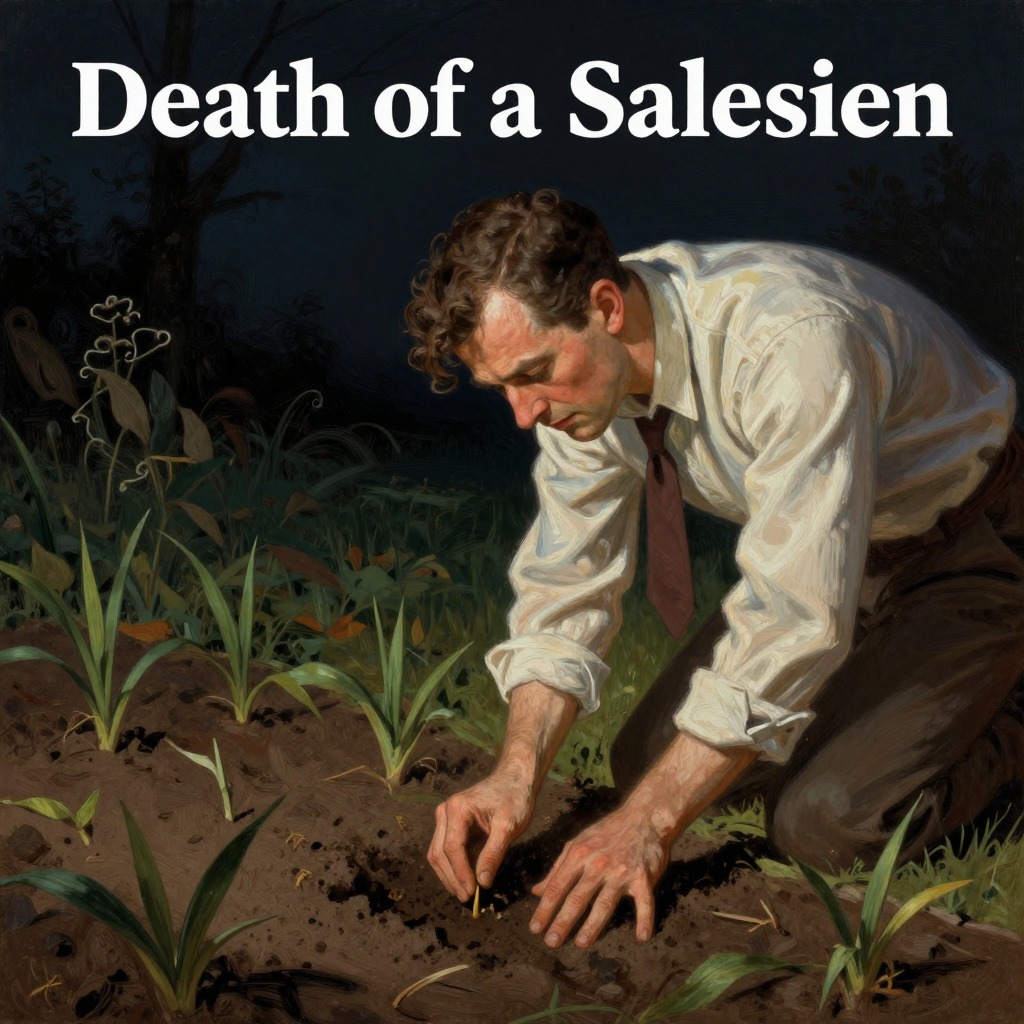
After his sons abandon him in the restaurant, a shattered Willy asks the waiter Stanley if there is a seed store in the neighborhood. He is frantic, insisting, "I've got to get some seeds, right away. Nothing's planted. I don't have a thing in the ground" . This is not a practical plan; it is a symbolic act of desperation. He returns home in the blue of night, carrying a flashlight, a hoe, and a handful of seed packets. He raps the top of the hoe to fix it firmly and begins measuring off rows in the dark, reading the instructions on the packets by flashlight: "Carrots... quarter-inch apart. Rows... one-foot rows" . He puts down packets for beets and lettuce, marking the earth with a precision that his life has lacked. The act is a stark contrast to the towering, angular apartment houses that now hem in his small, fragile home, a futile attempt to reclaim a pastoral past that has been "massacred" by development.
The Symbolic Collapse of Hope
The seed packets are not just a symbol of hope; they are a symbol of hope that has already been proven impossible. Earlier that same morning, Linda had gently reminded Willy that "not enough sun gets back there. Nothing'll grow any more" . Willy's response was a promise of a future he could not deliver: "You wait, kid, before it's all over we're gonna get a little place out in the country, and I'll raise some vegetables, a couple of chickens" . The seed packets, therefore, are the physical manifestation of a lie he tells himself. He is trying to plant a garden in a yard where the grass no longer grows, where the elm trees he and Biff once hung a swing between have been cut down. The act is a direct, tragic contradiction of the reality he refuses to accept.
The Final Confrontation and Abandonment
The seed packets become the backdrop for the final, brutal confrontation between Willy and Biff. When Biff finds his father in the yard, Willy is still clutching the packets, his mind fractured between the past and the present. He is simultaneously arguing with the ghost of his brother Ben about the value of his life insurance policy and trying to plant seeds. When Biff tries to force him to face the truth, Willy's mind snaps back to the packets, and he begins picking them up in confusion, indignantly blaming the neighborhood for boxing him in: "Where the hell is that seed?... You can't see nothing out here! They boxed in the whole goddam neighborhood!" . The seeds are the last object of his attention before he is pulled inside for the final, devastating argument that ends with Biff in tears and Willy, astonishingly, feeling loved. The packets are left behind, abandoned in the dark yard, their promise unfulfilled, just like the life of the man who bought them.
Thematic Significance: The Wrong Dreams
The seed packets crystallize the central tragedy of Willy Loman. He is a man who "had the wrong dreams" , as Biff says at his grave. His hands were capable of real, tangible creation—he was "a happy man with a batch of cement" , and there is "more of him in that front stoop than in all the sales he ever made" . Yet he devoted his life to the intangible, evanescent world of sales, where a man is "way out there in the blue, riding on a smile and a shoeshine" . The seed packets represent the path not taken, the honest, physical labor that could have grounded him. His frantic, nocturnal attempt to plant them is a final, heartbreaking recognition of this truth, a last-minute effort to build something real with his hands before he trades his life for the insurance money that he believes will finally make him a success in his son's eyes. The seeds, which will never grow, are the perfect emblem of a life spent chasing a harvest that was never meant to be.